•8 min read
The Dopamine Detox Lie: Why Locking Your Phone Away Doesn't Fix Anything
- digital addiction
- dopamine
- neuroscience
- behavior change
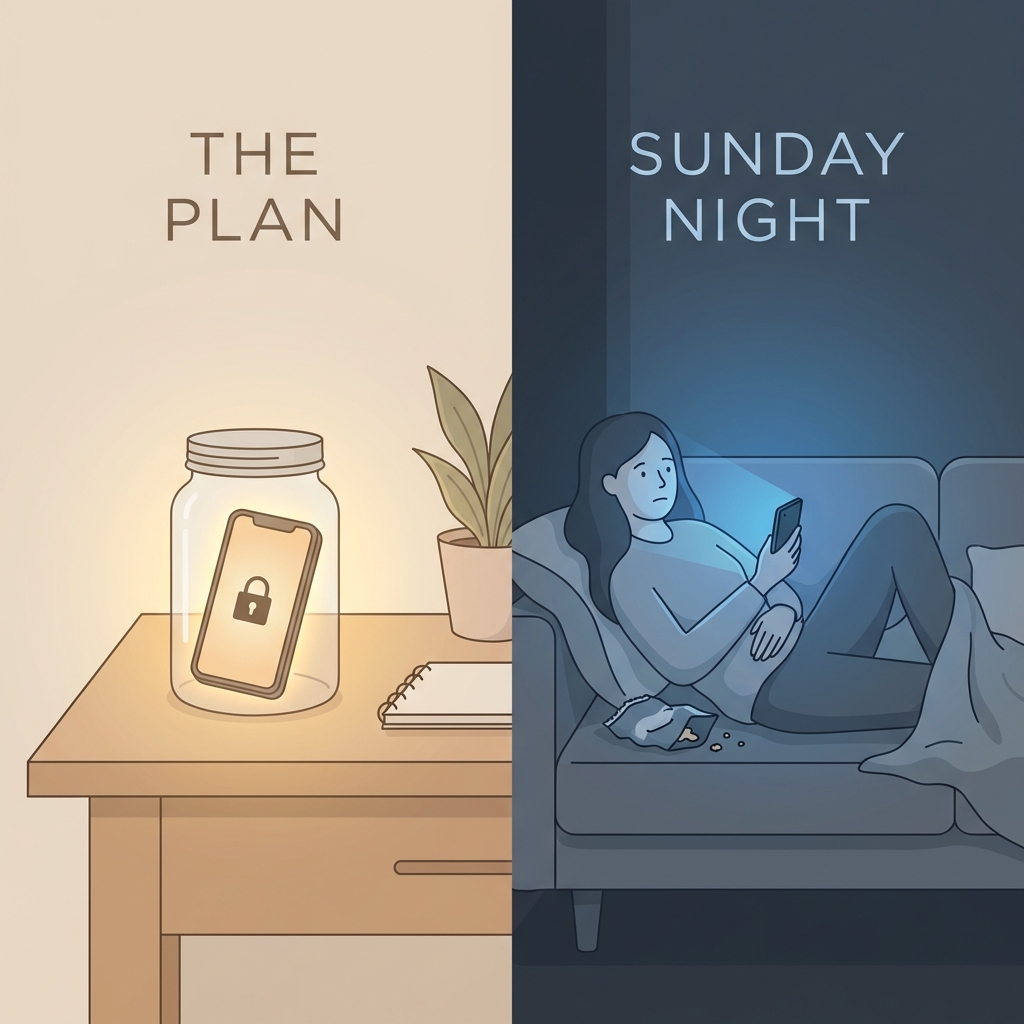
You notice you're picking up your phone 80 times a day. You're losing whole evenings to YouTube, opening Instagram before your feet even touch the floor. So one Friday you decide enough is enough: the phone goes in a drawer for the whole weekend. No screens, no exceptions. A proper "dopamine detox."
By Sunday night you're back on the couch scrolling, and you feel worse than you did before you started.
Taking a break from your phone is fine. Nobody's arguing with that. But the way most people talk about digital detox, as if you're resetting your brain's pleasure receptors through sheer deprivation, gets the science wrong. You can't "detox" from dopamine. And white-knuckling through a screen-free weekend does nothing about the thing that keeps pulling you back.
Dopamine Isn't What You Think It Is
Pop psychology turned dopamine into the brain's "pleasure chemical." The story is simple: notification goes off, dopamine floods your system, you feel good. Do it too much and you fry your receptors. Fast for a while and they recover. Problem solved.
Almost none of that is true.
Dr. Judson Brewer, a psychiatrist and addiction researcher at Brown University, is blunt about it: dopamine is not a pleasure molecule. It's a learning and motivation molecule. Neuroscientist Kent Berridge's work at the University of Michigan backs this up. His research showed that "wanting" and "liking" are separate systems in the brain. Dopamine powers the wanting. It has nothing to do with the pleasure itself. The whole logic of dopamine fasting falls apart once you realize those aren't the same thing.
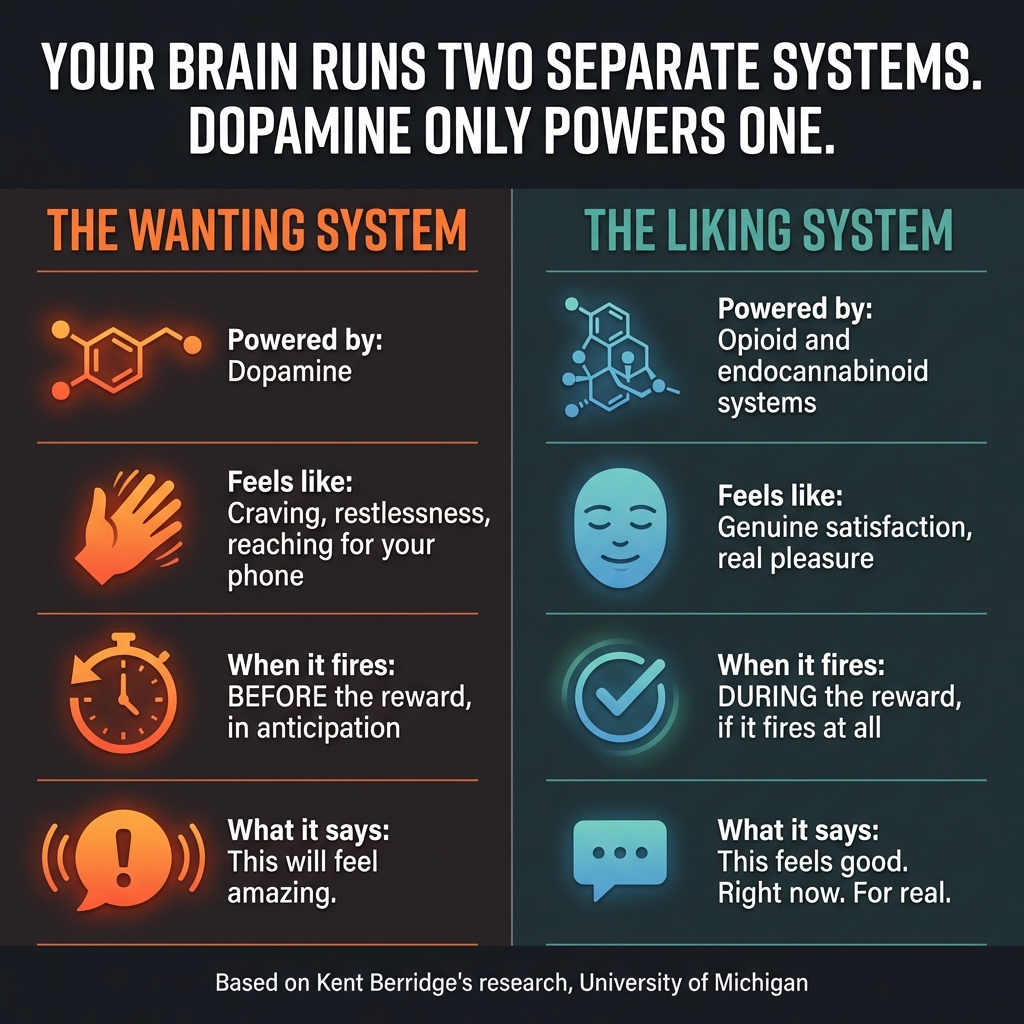
So what does dopamine do? When you first stumble onto something rewarding (the little jolt of novelty from checking your phone, say), your brain releases dopamine not as a pat on the back, but as a push forward. Do that again. But here's the part most people get wrong: dopamine was never really about the reward itself. It fires in anticipation, before you get the thing. That feeling is craving. It's the itch that says "pick up the phone," not the satisfaction of having picked it up.
If you could drain your brain of dopamine, you wouldn't feel calm and focused. You'd lose the will to move, eat, or do anything at all. Not exactly the zen state the internet promised.
The psychologist who coined "dopamine fasting" in 2019, Dr. Cameron Sepah, never meant for people to take it this far. He was sticking a catchy label on a therapy technique called stimulus control, which just means taking scheduled breaks from specific triggers that give you trouble. But the internet grabbed the phrase, stripped the nuance, and turned it into a weekend of self-punishment.
Why "Just Put the Phone Down" Doesn't Work
The bigger problem with screen detoxes isn't even the bad biology. It's what happens inside your head when you try one.
You lock the phone in a drawer. You sit on your hands through a weekend of boredom. And you're relying entirely on willpower. Brewer points out that willpower doesn't even appear as a variable in the neuroscience equations for behavior change. The way we talk about it, it's a story we tell ourselves.
Even if it were reliable, it has a nasty flaw: it gives out fastest when you need it most. There's an acronym in addiction recovery, HALT, for hungry, angry, lonely, tired. Those are the moments you're most likely to relapse. They're also when the prefrontal cortex, the part of your brain that handles self-control, checks out first. The detox demands willpower at the precise moments you have the least of it.
Brewer has a name for what happens next: the Abstinence Violation Effect. His patients have a shorter one: "the f*ck-its." You hold out for a while. Then you're stressed, or bored, or it's 11pm and you can't sleep, and you pick up the phone for "just a second." One slip feels like total failure. Screw it, you think, and suddenly it's three hours of scrolling. Then comes the shame. Then another detox attempt. Then the same loop all over again.
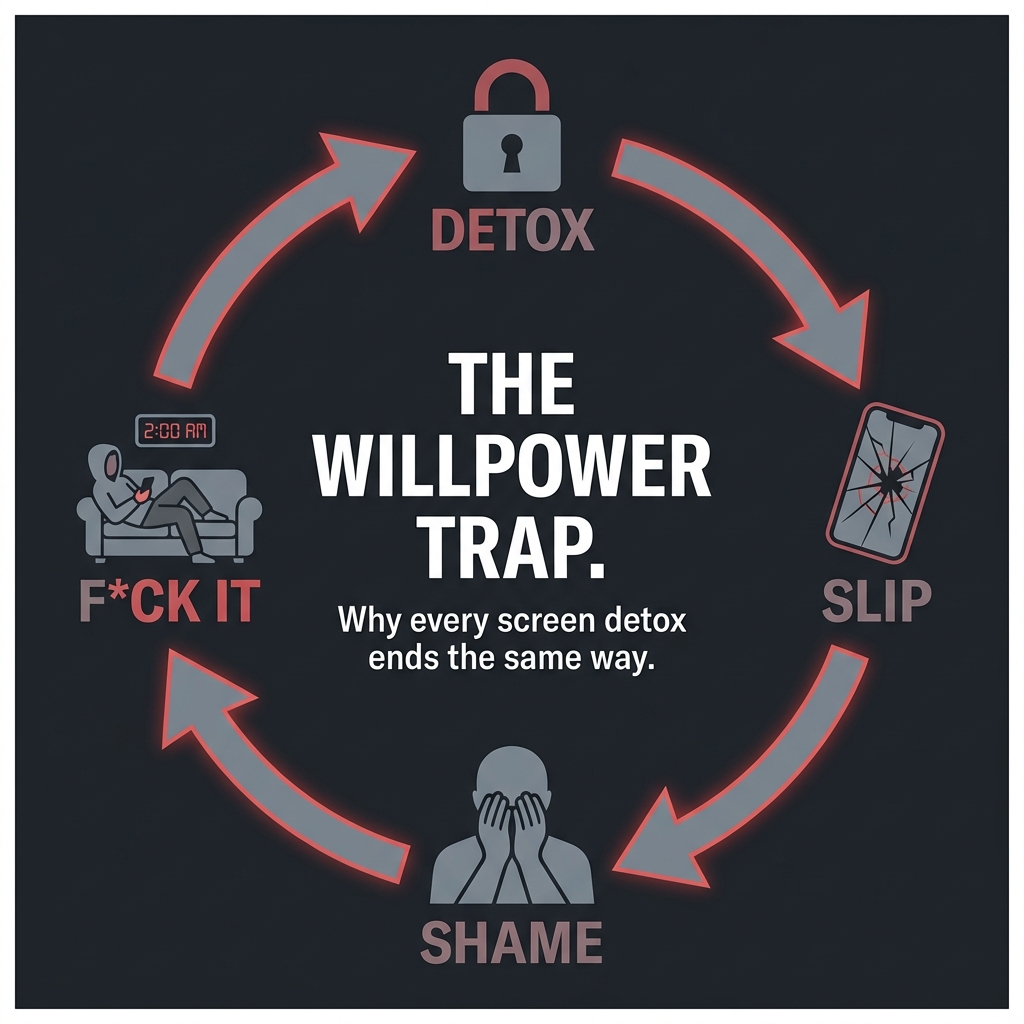
That's not a character flaw. That's what happens when you try to overpower a learning system with a tool that was never built for the job.
And through all of this, the habit loop stays completely untouched. The trigger, the behavior, the reward: all still there. Deprivation doesn't erase what your brain has learned. It still believes checking your phone when you're stressed is a solid move. You just hit pause for a weekend. The program is still installed.
What Works Instead
If grinding through it doesn't hold up, what does?
Brewer's approach goes in the other direction. Instead of overpowering the habit, you work with the way your brain already learns. His argument: the brain will only drop a behavior when it figures out, through its own experience, that the reward isn't real. You don't force anything. You just feed it better data.
He tested this. In smoking cessation studies, having people pay careful attention while they smoked (not quitting, just noticing) produced five times the quit rates of standard treatment. Not through discipline, but through awareness. His research focused on smoking, but the mechanism is the same for any habit loop, screens included.
The method has three parts.
Map the loop first. You can't change what you haven't looked at. When do you reach for your phone? What sets it off? Maybe it's a stressful email. Maybe you're lying in bed and can't sleep. Maybe there's a lull in conversation and you feel awkward. And what follows? You open an app. You scroll for a while. The result? You're distracted for a few minutes, but ten minutes later you feel more anxious than before you picked it up.
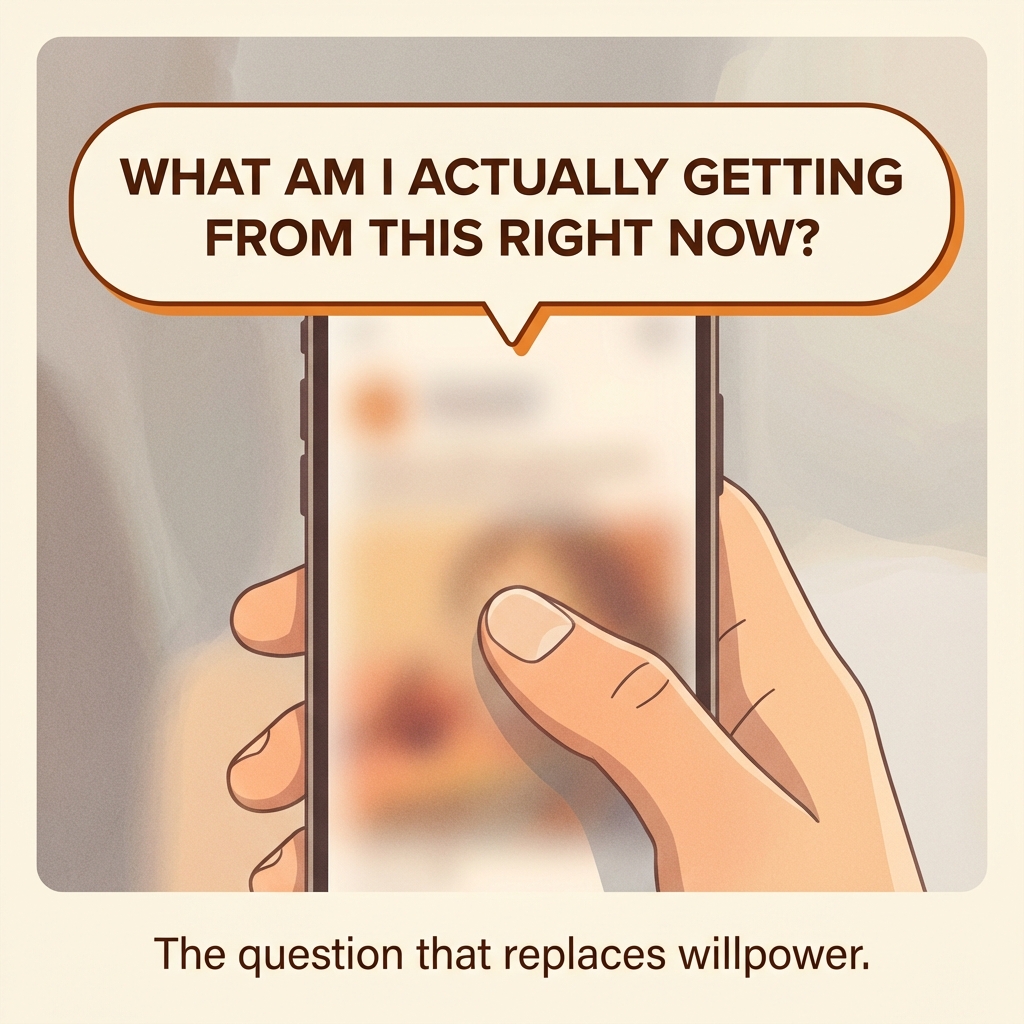
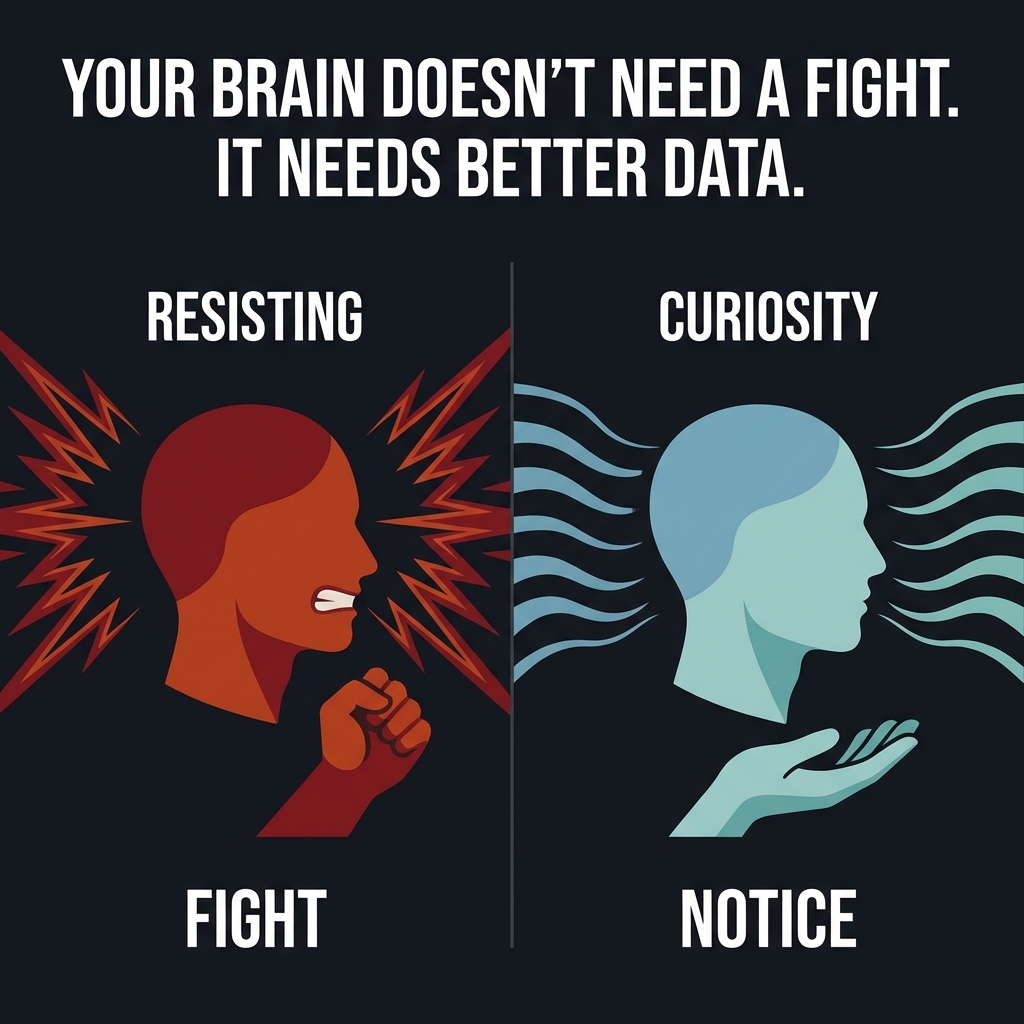
Then comes the part most people skip: pay attention to how the screen time actually feels while you're in it. Not with judgment. With curiosity. Don't force yourself to stop. Just notice. You're twenty minutes into a scroll. What is this giving you, right now? Does it feel good, or does it feel like nothing at all? Get genuinely curious about the answer.
Brewer found that after ten to fifteen rounds of that kind of open, curious noticing, the reward value of the behavior dropped below zero. The brain got "disenchanted," as he puts it. Not because anyone lectured it about screen time being unhealthy. Every smoker on earth knows smoking is bad. That knowledge alone doesn't change a thing. What changed in Brewer's studies is that people felt, through direct experience, that the habit wasn't delivering what it promised. Knowing something is unhealthy is a thought. Feeling that it's unrewarding is an experience. And the body that feels is far stronger than the brain that thinks.
The last piece: give your brain something better. Once you stop buying into a habit, there's a gap, and if you leave it empty the old pattern fills it right back in. You need a replacement that feels good on its own terms, not some grim substitute you're forcing yourself through.
Brewer's suggestion sounds almost too simple: curiosity. When the urge to check your phone shows up, instead of clenching your jaw and trying to ride it out, turn toward the urge itself. What does it feel like in your body right now? Is there tension in your chest? A restless feeling in your hands? Curiosity is an open state. It feels nothing like the tight, anxious clench of resisting a craving. And because it feels better, your brain is willing to make the swap.
Start Tonight
You can turn off notifications and charge your phone in another room. Those things help around the edges. But they're not the point.
The point is that the next time you catch yourself twenty minutes deep in a scroll, you don't need to throw the phone across the room. You don't need to shame yourself into a weekend-long detox. You just need to ask one honest question: what am I getting from this right now?
Sit with the answer for a second. If you're genuinely enjoying what you're watching, fine. If you're just numbing out, notice that.
That's it. No lockbox. No cleanse. Just your own attention, pointed at the truth of what's happening. Your brain will do the rest. It's been learning your whole life. It's learning right now.
Sources and Further Reading
- Harvard Health Publishing: "Dopamine fasting: Misunderstanding science spawns a maladaptive fad" by Peter Grinspoon, MD.
- The Scientist: "Debunking the Dopamine Detox Trend" (an overview of the neuroscience of dopamine and motivation).
- Dr. Judson Brewer: research on habit loops, mindfulness-based addiction treatment, and the neuroscience of craving.
- Kent C. Berridge, University of Michigan: research on the distinction between "wanting" (incentive salience) and "liking" (hedonic impact) in reward systems.
- University of Reading / News-Medical: expert commentary by Dr. Ciara McCabe clarifying that avoiding triggers does not "reset" brain chemistry.